ElevenLabs is the voice stack for someone who needs speech that did not come from a recording session. The docs describe text-to-speech, speech-to-text, voice cloning, conversational agents, and generative audio. ElevenCreative is the browser app for voiceovers, music, dubs, and studio projects. ElevenAgents is the builder for a conversational voice agent, with a visual canvas for non-developers and an interface for developers. ElevenAPI is how an application passes a voice ID and receives audio. Those are different jobs. A narration is a script you already wrote. A dub is an existing video whose speech has to change language. An agent is a conversation that has to answer someone.
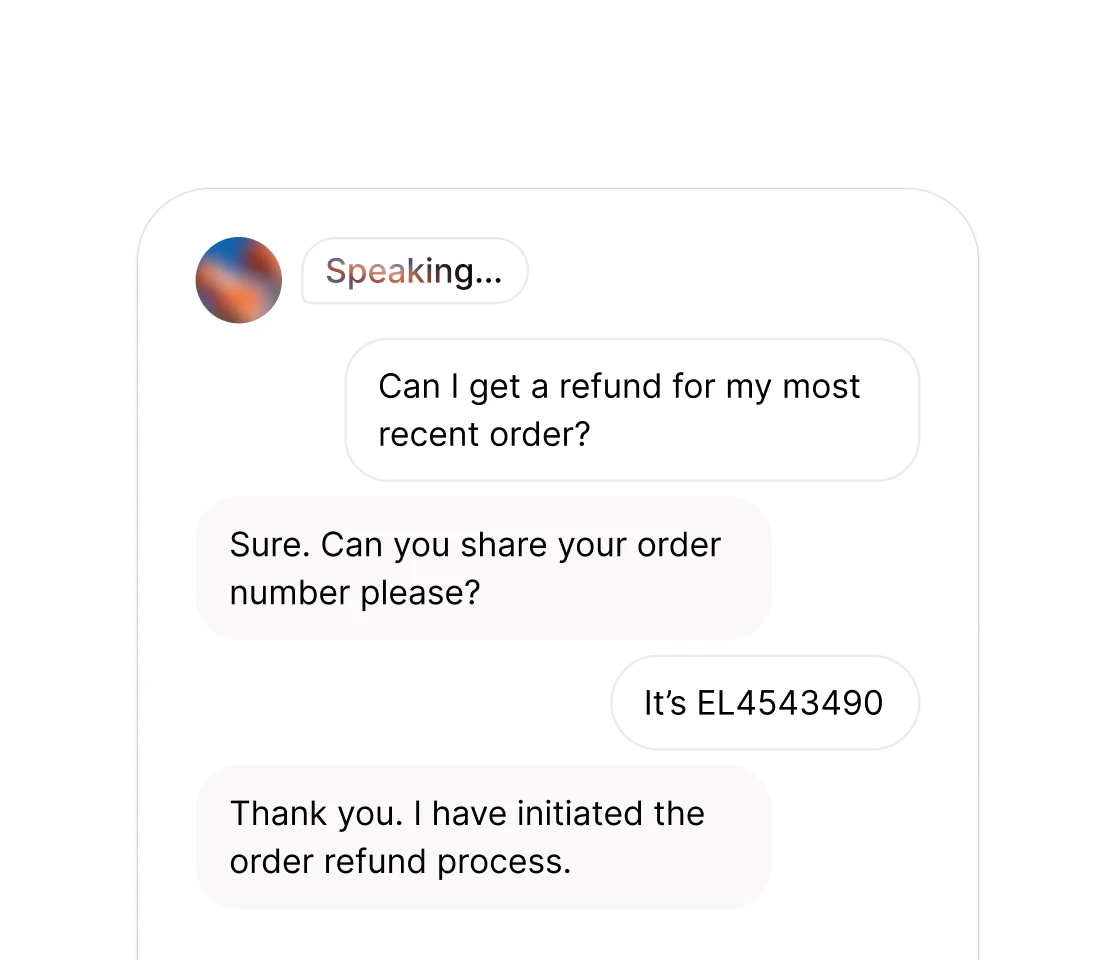
Official image of a conversational agent. The speaking indicator shows the agent is in a live turn, which is how you listen to a test before a real call. Source ↗
Pricing model
Freemium
Main input
A script, an audio or video file, or an agent brief
Output
Speech, transcripts, music, dubs, or a spoken conversation
Access
Web app and an API, plus a separate agents builder
Is ElevenLabs right for you?
Choose ElevenLabs when the deliverable is audio: a read of a script, a transcription, a dub, music, or a voice that talks back. In the creative app you pick a voice in the dashboard, or you pass in API requests with that voice’s ID if your own app is calling the service. Listen to a short section before you generate a chapter. For an agent, design the conversation and try it in the builder, where the official image shows a speaking indicator during a back-and-forth. Do not treat an agent call as narration characters plus transcription minutes. The agents pricing page says agents are billed by call minutes, not by the shared credit pool used for speech, transcription, music, and dubbing.
A good fit for
Reading a script you have already written, in a voice you select.
Dubbing a video, or generating music and effects, as jobs that are not the same as a voiceover.
Designing a voice agent and hearing a test conversation before it takes a live call.
Know the trade-offs
Creative tools share one credit pool. Agent plans are billed in call minutes, not as a sum of those tools.
A voice ID in the dashboard is the same ID an application must pass. Generating the wrong voice is a selection mistake, not a model mystery.
LLM usage on an agent is billed separately from the call minute, and an outside phone provider bills its own charges.
Speech, dubs, and a voice agent you can test
Read a script in a voice you choose
Text to speech starts from words you have already written. You choose the voice in the dashboard, or you copy its ID if an application will pass in API requests. The docs give the shape of that ID and treat it as the handle for the voice, so the app and the dashboard are selecting the same thing. Generate a paragraph and listen for pronunciation, pacing, and any name the voice stumbles on. Fix the script, then generate the next section. A chapter is a sequence of those sections, not one unreviewed file.
Voice cloning is the related choice when the read should sound like a particular person rather than a stock voice. The homepage lists instant cloning on paid creative plans and professional cloning further up. Use a stock voice when you do not have rights and a recording to clone. Speech to text is the reverse job: you already have audio and you need the words. It is not a step you add to a narration unless you also need a transcript.
Dubbing takes a video whose speech is in one language and produces another. That is a different task from reading a script you wrote this morning. Automatic dubbing is the first pass. Dubbing Studio is where you correct a line instead of accepting the whole file. Music is a third job: you describe a piece and get music back. Sound effects are generated one at a time. Voice changer and voice isolator process audio you already have.
These creative jobs draw on one shared monthly credit pool, and they do not spend it in the same way. A spoken character, a minute of music, and a dub are different kinds of work. The rates are in the pricing section. A conversation with a caller is an agent, not a dub plus a transcript.
Official image of a conversational agent. The speaking indicator shows the agent is in a live turn, which is how you listen to a test before a real call. Source
Build a voice agent and hear it talk
ElevenAgents is the product for designing and operating a conversational voice agent. Non-technical authors get a visual builder. Developers get programmatic control. You write what the agent should do, attach the knowledge it may use, and place a test call or a widget conversation. The official image is that test: a spoken exchange with a Speaking indicator, so you can hear whether the agent actually answers before anyone else calls it. Change the instructions, then run the same question again.
The agents pricing page is explicit that these plans are billed by call minutes, not by the shared credit pool. A narration quote and a transcription quote do not add up to the cost of that call. Included minutes and the price of an extra minute are on the agents page, and the language-model usage sits on top of the minute. If you connect an outside telephone provider, that provider bills you itself. ElevenLabs’ own telephony is not an extra ElevenLabs charge.
Paste one section of the lesson, choose the voice, and generate that section only. Listen for terms of art, numbers, and names. Correct the spelling the voice misread, then generate the next section. Keep a voice ID written down if the same lesson will later be produced from your own app, because that ID is what you pass in API requests.
These steps suggest a chapter built from reviewed sections. They are not a dub and they are not a phone agent. The character rate for this job is on the pricing page; you do not need it to decide whether the read sounds right.
Dub a short tutorial before the full video
Take a one-minute slice of the tutorial, not the whole file. Run dubbing into the language you need and watch it with the picture, because a correct sentence can still land late. If a term is wrong, fix that line in Dubbing Studio rather than redoing the hour. When the minute holds, run the rest of the video in the same setup.
This is a video job. Listen for a word that is right but late, and for a name the new language still says in the old one. Music under the same video is a separate generation. Add it after the speech sits on the picture, not before.
Test a support agent before it answers a phone
Write the three questions callers actually ask, plus the answer the agent is allowed to give when it does not know. Build that in ElevenAgents and place a test conversation. Use the speaking indicator as your cue to listen, then interrupt with the follow-up a caller would really say. If it invents a policy, fix the knowledge or the instruction and run the same question again.
The agents page says plans are billed by call minutes, not by the shared credit pool. A test during setup is still a call on that meter. Move to a live number only after the three questions get answers you would let a customer hear.
How to get started with ElevenLabs
1
Name the audio job
Decide whether you are reading a script, dubbing a video, making music, or testing an agent. The meter follows that choice.
2
Select the voice
Pick it in the dashboard, or copy the voice ID if the app will pass in API requests. Generate one short section.
3
Listen once
Play the section or the test conversation. Fix the script, the dub line, or the agent instruction before you run the long version.
4
Match the bill to the product
Creative work uses the shared credit pool. An agent uses call minutes. Read that plan after the short pass sounds right.
Creative plans draw on one shared monthly credit pool. The published monthly price and included credits are Free $0 (10,000 credits), a Starter $6 monthly price with 30,000 credits, and a Creator $22 monthly price with 121,000 credits, with Creator’s first month at $11. Pro is $99 for 600,000 credits, Scale is $299 for 1,800,000 credits and 3 seats, and Business is $990 for 6,000,000 credits and 10 seats. Enterprise is custom. Text to speech costs one credit per character of input text. The same table lists speech to text at 330 credits per minute, music at 900 credits per minute, sound effects at 200 credits per generation, voice changer and isolator at 1,000 credits per minute, and dubbing from 2,000 to 10,000 credits per minute depending on studio and watermark. ElevenAgents is separate: plans are billed by call minutes, not by the shared credit pool. The agents page includes 15 minutes on Free, 75 on Starter, 275 on Creator, 1,238 on Pro, 3,738 on Scale, and 12,375 on Business. Additional call minutes cost $0.08 per minute, burst pricing is $0.16 per minute past the concurrency limit, and text messages cost $0.003 each.
Free
A short narration test, or a few agent test minutes.
Free $0 (10,000 credits)
Creative credits each month, plus 15 agent minutes on the agents page
10,000 creative credits
15 minutes of agent calls and 4 concurrent calls
Starter
Regular short voiceovers and a small agent pilot.
Starter $6 monthly price
30,000 creative credits; 75 agent minutes on the agents plan
Commercial license and instant voice cloning on the creative plan
75 minutes of agent calls
Creator
Longer narration plus professional voice cloning.
Creator $22 monthly price
121,000 credits; first month $11. Agents list 275 minutes.
Professional voice cloning
275 minutes of agent calls and 10 concurrent calls
Pro
Production volume where both the pool and the call minutes are in steady use.
$99 per month
600,000 creative credits; 1,238 agent minutes
Larger creative allowance
1,238 agent minutes and 20 concurrent calls
Do not add the character rate to the transcription rate and call the sum an agent price. Agent language-model usage is billed on top of the minute, and an external telephone carrier bills separately. Creative credits reset monthly and unused credits roll over for up to two months. Taxes are extra. Confirm the current checkout, including any first-month discount, before you rely on a card.
You are editing a video by its transcript, not only generating the voice.
Descript edits picture and sound by changing the transcript, and it can also synthesize speech. ElevenLabs is the fit when the voice itself, a dub, or a telephone agent is the product you are making.
You need a song from a description or from lyrics.
Suno is built to write and arrange songs. ElevenLabs can generate music inside a broader voice stack, and it is the closer fit when the same project also needs narration, a dub, or an agent.
ChatGPT can draft the words. It does not select an ElevenLabs voice, dub the picture, or bill a phone minute. Bring the finished script to ElevenLabs when you are ready to hear it.
ElevenLabs: common questions
Can I try ElevenLabs without paying?
Yes. The creative Free plan is Free $0 (10,000 credits). The agents page includes 15 minutes of calls on its free plan. Paid plans raise both the credit pool and the included minutes. Confirm which product you are subscribing to at checkout.
Text-to-speech costs one credit per character of input text, from the shared creative pool. Speech to text, music, effects, and dubbing have their own rates on that same table. Those rates are not the agent meter.
ElevenAgents plans are billed by call minutes, not by the shared credit pool. Extra minutes on the published table cost $0.08 per minute. Language-model usage is additional. Do not estimate the call as narration characters plus transcription minutes.
Each voice has an ID you select in the dashboard or pass in API requests. Use the same ID the editor used if the production pipeline has to match the test.
One section of a narration, one minute of a dub, or one test conversation with the agent. Fix the words or the instructions there. Generate the rest only after that pass sounds like something you would ship.
NavHunt did not run ElevenLabs. Creative rates come from the public pricing page and the docs overview. Agent minutes come from the public agents pricing page read on 7 October 2026. The picture is the official conversational-agent image with a speaking indicator.